How to Descale a Kettle Properly (and Why Hard Water Punishes Yours)
A UK hard-water walkthrough on descaling a kettle: why limescale insulates the element, and an honest comparison of vinegar, citric acid, and commercial descalers.
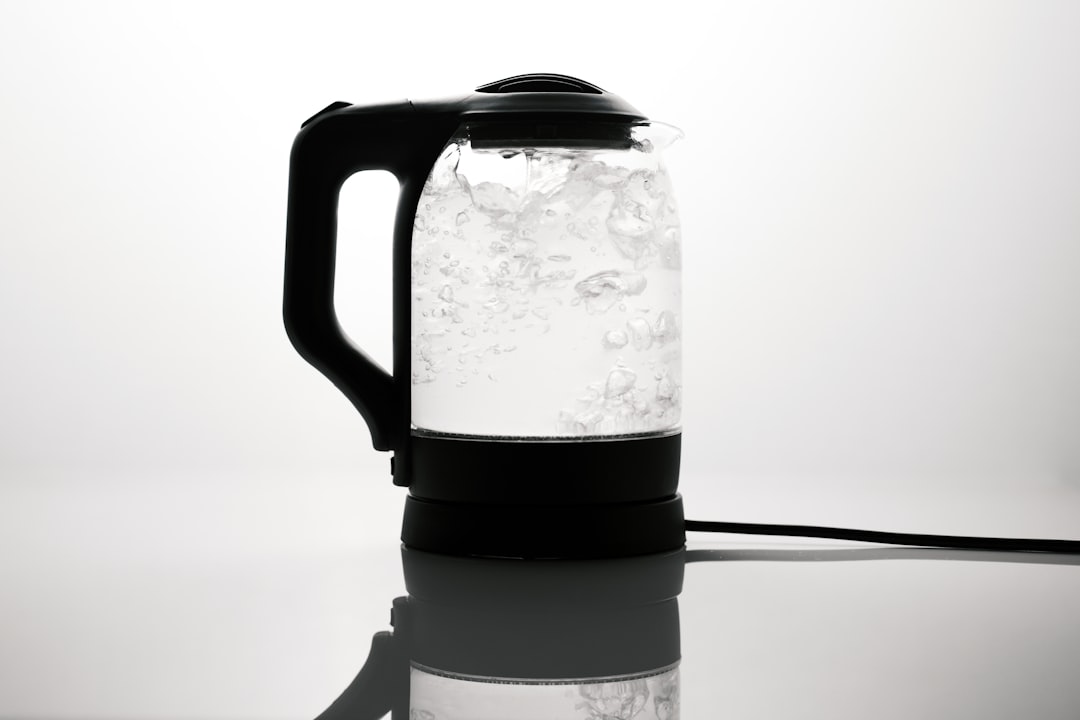
My kettle started taking twice as long to boil in November. The furring inside is not just chalky, it insulates the element and quietly wastes electricity. That was the noticing bit. The doing bit took a Saturday morning, a bag of citric acid, and a bit of reading about why the stuff forms in the first place.
If you live in a UK hard-water area, which is roughly everywhere south and east of a line from the Wash to the Severn, plus pockets of the Midlands and the East Midlands, your kettle is fighting chemistry every day. Soft-water areas rarely see heavy scaling, but even a soft-water kettle picks up a layer over time if it is used every day and rarely descaled. a family member in Kent, we visit, we fill the kettle there. Enough trips, enough boils, and even a soft-water kettle picks up a layer.
What limescale actually is, and why it insulates
Tap water carries dissolved calcium bicarbonate. When you heat it past about 60 degrees, the bicarbonate breaks down into calcium carbonate (chalk, essentially), carbon dioxide, and water. The chalk cannot stay dissolved at that temperature, so it plates out onto the nearest hot surface. In a kettle, that is the heating element and the base plate directly above it.
The problem is not cosmetic. Calcium carbonate has a thermal conductivity of roughly 2.2 W/m·K. Stainless steel is about 16, and the copper or aluminium alloys inside a good element are 200 or higher. A 1 mm layer of scale over your element is genuinely acting like a thin ceramic blanket. The element has to run hotter to push the same heat through into the water, which means it runs longer to reach 100 degrees, which means more kilowatt-hours per boil.
The Energy Saving Trust puts a full 3 kW kettle at around 0.11 kWh per one-litre boil when clean. A heavily scaled kettle can push that up by 20 to 30 percent. Not a fortune, but the element also fails sooner because it spends its life overheating a chalk crust rather than water.
Three descalers, honestly compared
There are essentially three household options. I have used all of them in the last decade, some more successfully than others.
| Descaler | Cost per treatment | Contact time | Smell | Element safe | Notes |
|---|---|---|---|---|---|
| White vinegar (5%) | About 40p (250 ml) | 30-60 mins hot | Strong, lingers 2-3 boils | Yes, if rinsed | Weak acid, works on light scale only |
| Citric acid powder | About 25p (2 tbsp) | 15-20 mins hot | Faint, rinses clean | Yes | My default. Food grade, cheap in bulk |
| Commercial (Oust, Kilrock, Ecozone) | £1 to £2 per sachet | 10-15 mins hot | Chemical, ventilate | Usually, check the label | Fastest, sometimes contains sulfamic acid |
Why I stopped using vinegar
White vinegar is roughly 5 percent acetic acid. That is a weak acid, and calcium carbonate needs a fair concentration to dissolve at any speed. You end up boiling half a kettle of vinegar, leaving it to steam for an hour, and then boiling the kettle three more times with clean water to get the pickle smell out of your morning tea. It works on a fresh light dusting. It struggles once you have a proper crust on the element.
Why citric acid is my default
Citric acid is a stronger acid (pKa around 3.1 versus 4.7 for acetic), it comes as a dry powder, and it dissolves scale about three times faster in my rough kitchen tests. A 500 g bag from a supermarket or brewing shop costs three or four pounds and lasts a year. It is also what several commercial “eco” descalers use as their active ingredient, just repackaged with a markup.
When commercial descalers earn their keep
If your kettle has an inch of scale on the base, sulfamic acid based descalers will shift it in one go where citric acid needs two rounds. Read the label. Some commercial products are aggressive enough to attack the aluminium alloy in cheaper elements if left overnight. The 10 to 15 minutes on the sachet is not a suggestion.
How to descale a kettle, step by step
- Empty the kettle. Weigh out 2 tablespoons (about 30 g) of citric acid powder, or measure 250 ml of white vinegar, or open one commercial sachet.
- Add the descaler and fill the kettle with water to just above the top of the element or the maximum fill mark, whichever is lower.
- Boil once. Let it sit. Citric acid needs 15-20 minutes, vinegar needs 30-60, commercial needs whatever the sachet says.
- Pour the liquid out. If chunks of scale come with it, that is the win. If the water is milky but the base still looks white, refill with clean water and boil again with the same solution.
- Rinse the kettle three times with cold tap water. Fill to max, boil, tip out. Repeat twice.
- Boil one more time with fresh water and tip it out before making tea. This is the step people skip and then complain the kettle tastes odd.
What if it doesn’t work
Sometimes you descale and the kettle still takes forever. A few honest possibilities.
The element is genuinely failing. Modern concealed-element kettles (Bosch, Russell Hobbs, most of the Argos range from the last decade) hide a flat plate over the element. If that plate is pitted or discoloured brown-black under the scale, the element behind it has been overheating for months and its resistance has drifted. New kettle time. A decent one is 25 to 40 quid and will pay for itself in a year on a 3-cups-a-day household.
You have a fully exposed coil kettle (rare now, some travel kettles still). Scale wraps the coil in three dimensions and one pass of descaler will only get the outside. You may need two or three rounds, or a soak overnight with citric acid at half strength.
The scale has bonded to a plastic filter at the spout. Take the filter out, drop it in a mug of neat descaler solution for an hour, rinse.
Preventing the next round
If your postcode is on the hard end (Thames Water publishes a lookup, as do most regional water companies), a light descale every 4-6 weeks is easier than a deep one every six months. Empty the kettle after each boil so scale-forming water is not sitting on a warm element. Some people swear by a stainless steel “kettle protector” mesh ball that gives the scale somewhere else to precipitate. In my experience it collects some but not most, and it needs its own descaling.
The other option is a whole-house water softener, but at £400 to £1200 installed plus salt refills, that is a decision about your whole plumbing, not your kettle. a family friend put one in mainly for his combi boiler and the shower screen. The kettle benefit was a bonus.
Frequently asked questions
Answers below cover the questions that come up most often once you start actually doing this.
Related reading
Frequently Asked Questions
Every 4 to 6 weeks if you are in a hard-water postcode (most of the South East, East Anglia, and parts of the Midlands). Soft-water areas like Manchester or most of Scotland can stretch to every 3 or 4 months. Check the element after a rinse: if you see a matte white film forming, you have waited too long.
Yes, and it works, but you need a lot of it. Lemon juice is about 5 to 6 percent citric acid, so you would need the juice of 3 or 4 lemons to match 2 tablespoons of powder. It is a fine emergency substitute, not a routine one. Rinse three times because the sugars in lemon juice can leave a faint sticky residue.
Citric acid and dilute vinegar are safe for food-grade plastics and silicone seals used in modern kettles. Commercial descalers with sulfamic acid should be limited to the contact time on the sachet, usually 10 to 15 minutes, and rinsed thoroughly. Do not leave any descaler in the kettle overnight, especially with metal-bodied models where seams can be attacked.
Sometimes. A thick scale layer on the thermostat sensor can make it read water temperature falsely high and trigger the cut-out early. Descale twice with citric acid, then test. If it still clicks off early, the bimetallic strip in the base is failing and the kettle is at end of life.
Once the water has boiled and the scale has precipitated onto the element, the water itself is softer than it was going in. That is why some people boil, cool, and decant water for coffee or steam irons. It is not distilled, just lower in calcium than the tap it came from.

Smit Sharma
Smit Sharma writes and edits Repair Habit. He is not a licensed technician of anything. What he knows about repair he picked up the ordinary way: watching his father fix things around the flat rather than throw them away, spending two summers as an apprentice in a small electronics shop, and, once he had his own place, running through the mistakes himself on his own washing machine, kettle, chairs, and car. He is a working parent, a slow buyer of new things, and a slightly obsessive maintainer of the ones he already owns. He does not believe repairing your dishwasher makes you a better person. He believes it is often the cheapest and quietest response to a small problem, which is roughly all the philosophy this site carries.
You may also like
The Beginner’s Guide to Vacuum Cleaner Repair
Vacuums are mechanical things with three or four common failure points, almost all of which a beginner can…
The Real Reason Your Washing Machine Smells (and How to Fix It For Good)
A musty washer is almost never a soap problem. It is a maintenance problem with a quiet, two-week…

Why Your Dishwasher Smells (and Why It Is Not the Same Problem as a Washing Machine)
Dishwasher smell is not the same problem as a stinking washing machine. The fix is the filter, the…