How to Properly Clean and Maintain Leather Shoes
Leather shoes are not delicate, but they do need quiet, regular care. Twenty minutes a month is enough.
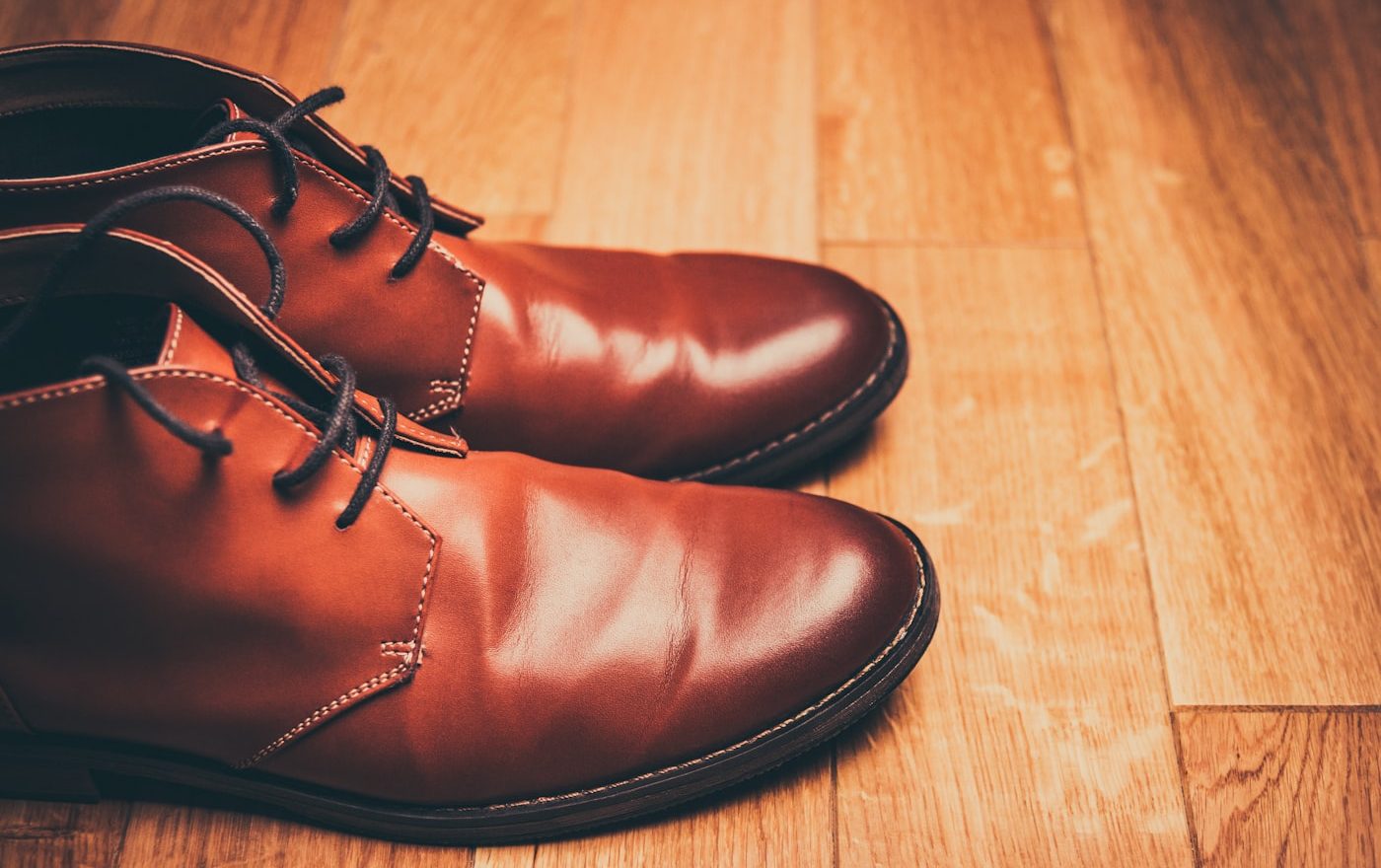
The pair of brown brogues I bought in 2008 are the same pair I wear today. They have been resoled twice, polished perhaps two hundred times, and they look better now than they did the day I bought them. They have a particular look to the toe, a patina of small dents and faint creases, that you cannot buy new. They look like they belong to somebody.
The shoes themselves are not unusual. They were not expensive even at the time. What kept them alive, and made them improve with age rather than wear out, is a small monthly routine that I learned from the man who sold me my first proper pair, in a shop on a side street in the UK that smelled of leather and shoe polish and quiet expertise. He showed me the routine in about ten minutes. He has, I believe, since retired. The routine has not.
What leather actually needs
Leather is a hide, and like any hide it is made of fibres bound together by natural oils. When new, the leather is supple and water-resistant because those oils are intact. Over time, the oils evaporate, get washed out by rain, and are drawn out by salt from winter pavements. Without intervention, the leather dries, stiffens, cracks, and eventually fails.
Everything in proper leather care is about replacing the oils that are leaving, removing the salt and dirt that are pulling them out faster, and protecting the surface from the next encounter with wet weather or rough pavement. It is a maintenance cycle, not a one-off treatment.
The monthly routine, in three steps
The whole thing takes about twenty minutes per pair, once a month, sitting at a table with the shoes laid on a sheet of newspaper. Most people who own leather shoes do almost none of this. The shoes that look like they belong to somebody are the ones whose owners do.
Step one: clean the surface. Wipe the shoe down with a soft cloth, working off any dust. Pay attention to the welt (the seam between the upper and the sole), where dirt accumulates and is easily missed. For mud or salt residue, dampen the cloth slightly and wipe gently; salt from winter pavements should be removed promptly because it draws moisture out of the leather and leaves white tide marks.
Step two: condition. Apply a small amount of leather conditioner to a clean cloth and rub it into the leather in small circles. Work over the entire upper, including the sides and the area around the laces. Let it sit for five or ten minutes; the leather drinks it in. A leather conditioner is essentially the oils that have evaporated being put back; brands vary in formulation, but a basic mink oil or a quality leather cream is what you want. Avoid anything advertised as a “shine” or “polish” at this stage; those products sit on top of the leather. Conditioner goes into it.
Step three: polish. Apply a small amount of shoe polish in the matching colour with a separate cloth or a small brush. Work it into the leather, paying particular attention to the toe and heel, which take the most punishment. Let the polish dry for a few minutes, then buff with a soft brush or a soft cloth until the shoe shines. Two thin coats of polish look better than one thick one.
The mistakes that age shoes prematurely
Several common habits, almost all done with good intentions, will shorten the life of a pair of leather shoes significantly.
- Wearing the same pair every day. Leather needs at least 24 hours to dry out fully between wears. If you have only one pair of good shoes, you are walking in damp leather every day, and damp leather wears out much faster than dry. The single biggest favour you can do a beloved pair of shoes is to own a second pair and alternate.
- Drying wet shoes near a radiator. Heat dries leather too fast, evaporating the natural oils and causing the upper to stiffen and crack. Wet shoes should be stuffed with newspaper (which wicks moisture out) and left in a cool, dry room for 24 to 48 hours.
- Skipping shoe trees. Wooden shoe trees absorb moisture, hold the shape of the shoe, and gently smooth out creases. Without them, the toe creases set deep and the leather distorts over time. Cedar trees are best because they also absorb odour, but any wooden tree is significantly better than none.
- Ignoring the welt. The stitched seam between the upper and the sole is one of the most important parts of a shoe. Dirt and grit accumulate in the welt and slowly degrade the stitching. Brush it out monthly with an old toothbrush. A welt in good condition is the difference between a shoe that can be resoled five times and one that cannot be resoled at all.
Dealing with rain and wet weather
The single most damaging thing for a leather shoe is being soaked through, then dried badly. Prevention is far better than cure.
Before wearing leather shoes in wet weather, treat them with a water-repellent wax or spray. Renapur, Saphir, and a handful of other quality conditioners include a wax that beads water off the surface. Apply it the night before, give it time to penetrate, and the shoes will shrug off most light rain.
If you are caught in a downpour and the shoes are saturated, do the following as soon as you can. Remove the laces and the insoles. Stuff each shoe firmly with newspaper, replacing it after a couple of hours when it has soaked up moisture. Place the shoes in a well-ventilated room, away from any direct heat. After 24 hours, replace the newspaper one more time. After 48 hours, the shoes should be dry. Once fully dry, condition the leather generously; the rain has stripped oils as well as soaked the leather.
Salt marks from winter pavements need a slightly different approach. Wipe the white tide mark off promptly with a damp cloth, then condition the area. If the salt has dried and crystallised, mix a teaspoon of white vinegar with a tablespoon of water, dab the salt mark with the solution, then wipe clean and condition. Salt left in the leather causes more long-term damage than any other single thing.
When to resole, when to retire
Good leather uppers can outlast multiple soles. A Goodyear-welted or Blake-stitched shoe can typically be resoled three or four times over a thirty-year lifespan, which means a single pair can carry you most of your adult life if treated well.
The signs that it is time to resole: visible wear right through the leather sole into the cork or stitching beneath, a heel that has worn down past the rubber lift, or water seeping through the sole in even light rain. A good cobbler will examine the welt at the same time, and if the stitching is sound, the resole is a routine job.
The signs that a shoe has reached the end of its life: cracks in the leather upper that go through the grain rather than just the finish, sole separation that runs along most of the welt, or a lining that has worn through and is now uncomfortable. At that point, the shoe has given everything it has, and replacement is sensible.
The smaller habits that matter
A few small touches make the routine easier and the results better.
Keep a shoehorn by the front door. Forcing your foot into a shoe without one stretches and damages the heel counter, which is the stiffened part at the back of the shoe that holds its shape. A simple wooden or metal shoehorn costs almost nothing and adds years to a pair.
Store shoes in cloth bags rather than the boxes they came in. Cloth allows airflow; cardboard boxes can trap moisture. A simple cotton drawstring bag protects against dust without sealing the leather.
Replace the laces when they start to fray. Good waxed cotton laces cost about three pounds and transform the look of a tired pair instantly. A snapped lace at the wrong moment, and a broken eyelet from too much force, can both be avoided by changing the laces before they look like they need to be changed. For broader thinking about extending the life of well-made things, our piece on the slow wardrobe follows much the same philosophy.
Leather shoes reward this kind of attention more than almost any other thing you own. A pair treated well looks better at ten years than it did new, looks distinguished at twenty, and looks like a friend at thirty. The same pair treated badly will be a tired, dried, cracked memory within five. The difference is twenty minutes a month and a slightly better drawer of tools than most of us start with.
For a related angle, our piece on Why Your Walls Have Hairline Cracks (and What Actually Helps) covers a closely connected problem.
For a related angle, our piece on The Quiet Maintenance Most People Skip on Their Boiler covers a closely connected problem.
For a related angle, our piece on A Practical Guide to Caring for Hardwood Floors covers a closely connected problem.
For a related angle, our piece on The Honest Truth About Cleaning Your Gutters covers a closely connected problem.
Frequently Asked Questions
Properly polish (condition and polish, not just a quick buff) once a month if you wear them regularly, or before each wear if they only come out occasionally. A quick brush-and-buff after each wearing keeps the surface looking sharp between full treatments. The full routine takes about twenty minutes. If a pair is going through a hard period (winter, wet weather, lots of travel), increase the frequency. If they are sitting in the cupboard for the summer, monthly is fine. The shoes will tell you when they are thirsty: the leather looks duller, slightly drier, less responsive to a soft buff.
Yes, occasionally, but not as a routine cleaner. Saddle soap is an alkaline cleaner originally formulated for tack, and it is moderately aggressive. Used a few times a year on shoes that have got genuinely dirty, it lifts ingrained grime that conditioner alone will not. Used weekly, it strips natural oils faster than you can replace them. After saddle soap, condition generously the same day. For routine monthly care, skip saddle soap entirely; a slightly damp cloth and conditioner does everything you need.
For fresh salt marks, wipe with a barely damp cloth as soon as you notice, then condition the area. For dried, crystallised marks, mix one part white vinegar with two parts water, dab the mark with a cloth, then wipe with clean water and condition. The vinegar dissolves the salt without damaging the leather. Two important notes: condition generously afterwards, because both salt and vinegar dry the leather, and test on an inconspicuous area first if the leather is light or delicate.
Conditioner is essentially food for leather. It contains oils that soak into the leather, replacing what has evaporated and keeping the fibres supple. Polish sits on the surface, providing shine, colour, and a degree of water resistance. Both are needed. A shoe that is only polished and never conditioned will have a beautiful gloss over increasingly dry, stiff leather; eventually it will crack despite the shine. A shoe that is only conditioned and never polished will be soft and well-fed but will look dull and scuff easily. The full routine uses both, in the order I describe in the main article.
Clean them first (you do not want salt or sweat sitting on them for months). Condition thoroughly. Insert shoe trees. Store in a cotton bag in a cool, dry, dark place; avoid attics that get hot in summer and basements that get damp. Check on them every couple of months. Once a year, condition again, even in storage. Shoes stored badly can come out of a cupboard cracked, mouldy, or distorted; shoes stored well come out looking essentially the same as the day they went away. The most common storage mistake is leaving them in their original cardboard boxes in a damp cupboard.

Smit Sharma
Smit Sharma writes and edits Repair Habit. He is not a licensed technician of anything. What he knows about repair he picked up the ordinary way: watching his father fix things around the flat rather than throw them away, spending two summers as an apprentice in a small electronics shop, and, once he had his own place, running through the mistakes himself on his own washing machine, kettle, chairs, and car. He is a working parent, a slow buyer of new things, and a slightly obsessive maintainer of the ones he already owns. He does not believe repairing your dishwasher makes you a better person. He believes it is often the cheapest and quietest response to a small problem, which is roughly all the philosophy this site carries.
You may also like

The Calm Sunday Routine That Keeps a Whole House Running
A short, repeatable rhythm on a Sunday afternoon is worth more to a house than a frantic deep-clean…
How to Restore the Shine of a Tired Bathroom
A tired bathroom can usually be brought back without renovation. A weekend of cleaning, resealing, and small fixes…
A Calm, Twice-Yearly Home Maintenance Checklist
Twice a year, a couple of focused afternoons can keep a house running quietly for decades. This is…