How to Clean a TV Screen Without Wrecking the Coating
Modern TV panels carry a thin anti-glare coating that most household sprays quietly dissolve. Here is the chemistry, the safe method, and what to buy.
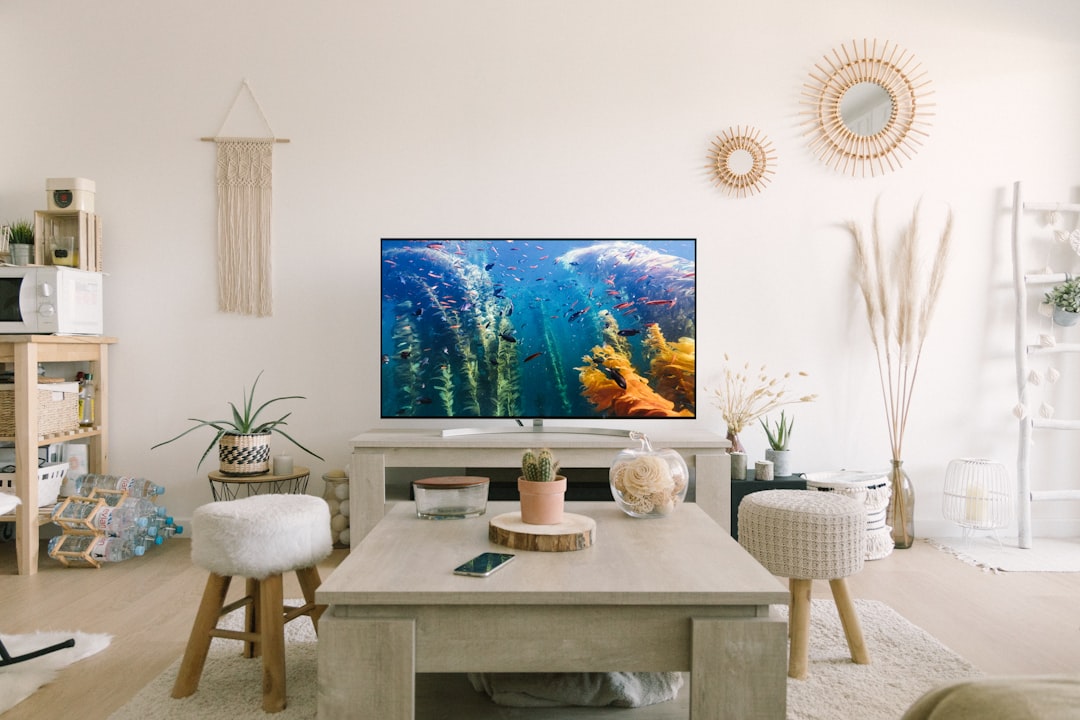
Our living-room TV is a 55-inch LG OLED, four years old, and last spring I caught myself about to spray it with the same bottle I use on the bathroom mirror. Something stopped me, probably the memory of my mother wiping the family CRT with kitchen roll and Windolene in about 1994. That was fine, because CRTs were essentially thick glass. Modern flat panels are not glass in that sense, and the thing on the front that makes the picture watchable in a bright room is a coating a few micrometres thick that dissolves in most of what sits under a British kitchen sink.
This is the piece I wish I had read before I started cleaning ours the wrong way.
The coating is not the screen
Almost every flat panel sold since about 2015, whether OLED, QLED, or ordinary LED-LCD, ships with an optical stack on the front. Somewhere in that stack sits an anti-reflective (AR) or anti-glare (AG) layer, usually a fluoropolymer or silica-based film, sometimes with an oleophobic top layer similar to the one on your phone. It reduces reflected light and stops fingerprints holding. It is also thin, soft, and chemically fussy.
LG’s own care guide is blunt: no alcohol, no thinners, no benzene, no ammonia. Samsung and Sony say the same in slightly different words, and Sony goes furthest by recommending a dry microfibre cloth for routine cleaning and distilled water only for stubborn marks (see Consumer Reports on TV cleaning for the same guidance from the other direction). None of these companies are being precious. They know what happens when the coating goes, because their returns departments see it.
What household cleaners actually do
The reason this matters is that most of the stuff people reach for is actively designed to cut through the exact chemistry the coating is made of. Here is the honest picture, based on the manufacturer bulletins, the Which? annual TV survey, and my own dead patch of coating on a Panasonic plasma I killed in 2018.
| Cleaner | Effect on AR coating | Verdict |
|---|---|---|
| Distilled water on microfibre | None | Safe |
| Dry microfibre alone | None | Safe |
| WHOOSH! Screen Shine (alcohol-free, pH neutral) | None | Safe |
| Vinegar diluted 1:20 in distilled water | Mild, usually fine | Tolerable |
| Isopropyl alcohol (70% or higher) | Dissolves fluoropolymer after 2 to 3 uses | Avoid |
| Ammonia sprays (Windex, most blue glass cleaners) | Cloudy patches within weeks | Avoid |
| Acetone (nail polish remover) | Strips coating on first pass | Never |
| Baby wipes | Variable alcohol, perfumes, streaking | Avoid |
| Kitchen surface spray | Surfactant residue, citrus acids | Avoid |
| Zeiss lens wipes (for glasses) | Alcohol-based | Avoid |
The pattern is boring but real. Anything that makes windows sparkle in one wipe is doing so by dissolving something, and on a TV panel that something is often the coating.
The method that works, in order
- Turn the TV off and let it cool for five minutes. A warm panel dries streaks straight in.
- Dust first, with a dry microfibre. A camera-lens grade cloth, not the yellow one from Wilko you use on the car. Loose grit is what puts fine scratches in AR coatings, not the wet wipe that follows.
- If marks remain, fold a fresh microfibre in quarters. Damp one quadrant with distilled water. Tap water in most UK cities leaves visible mineral spots on a dark panel, and it will annoy you every evening for a month.
- Wipe in straight lines, top to bottom, one direction only. Never circles. Circles smear the residue you have just lifted back onto clean glass.
- Flip to the dry quadrant and repeat the same direction. This lifts moisture before it dries into a rim.
- Leave it 30 seconds before switching back on.
If a mark refuses to lift, do not press harder. Do a second pass with fresh water. Pressing is how people crack OLED pixels, especially on the thinner LG C-series where there is no backlight assembly behind the panel to push against.
Products worth buying, and the ones to skip
The whole kit is small and cheap, which is the reason I want to be specific about it.
- WHOOSH! Screen Shine, about £8 for 100ml. Alcohol-free, ammonia-free, pH neutral. Recommended by Wirecutter and by most of the phone-repair shops on Oldham Street. Enough for two years of normal use.
- MagicFiber microfibres, six-pack for around £12. Thick enough to actually lift oil, not the thin polyester squares in the bargain “TV cleaning kits” on Amazon.
- 500ml distilled water, 90p from Boots or any chemist. Enough for years.
Skip anything labelled “TV cleaning kit” under £5. The cloth is usually low-density polyester and the spray, when tested by Wirecutter, was often just diluted isopropyl. That is the exact thing you are trying to avoid.
When the coating is already gone
Sometimes the damage is done before you read the article. Cloudy patches, a matte area where the picture goes flat, or a peeling edge near the bezel. Options, in order of what I would actually try:
- Warranty first. If the TV is under two years old, contact the manufacturer. LG and Samsung have replaced panels for coating failure in the warranty window, though they will ask, in writing, what you cleaned it with. Honesty helps here.
- Live with it and control the room. Anti-glare only earns its keep when you cannot control the light source. Close the curtain, move the lamp, and the coating loss disappears at night.
- Matte screen protector film. Photodon makes cut-to-size anti-glare film for £40 to £60 for a 55-inch panel. Applied carefully, on a still evening, with the room dust-settled, it restores the anti-glare effect. Applied badly, it introduces bubbles you will see for the life of the set.
- Do not try to re-coat it. The DIY sprays on eBay do not bond to modern panels. I have watched a friend try, and it is worse afterwards.
That is the honest map. Most people never need step three or four, because a dry microfibre and a bottle of distilled water is enough for the entire life of a television.
Frequently asked questions
Related reading
Frequently Asked Questions
Only if the label specifically says alcohol-free and ammonia-free. Most supermarket and Ryman-brand wipes contain isopropyl and will damage the anti-glare coating over months of use. The Zeiss wipes sold for glasses are alcohol-based and unsuitable for TVs.
A dry dust with a microfibre every two or three weeks. A damp clean with distilled water once every two or three months, or when there are visible marks. Cleaning more often than that is just wearing the coating for no reason.
The coating chemistry is broadly the same across all three, so the safe cleaners are the same. OLEDs are slightly more fragile mechanically because the panel is thinner and there is no rigid backlight behind it, so lighter pressure matters more. Never lean into an OLED with a cloth.
Do not use Goo Gone, WD-40, or nail polish remover. Warm the sticker gently with a hairdryer on the low setting for about 30 seconds, then peel from a corner. Lift the residue with a damp microfibre using distilled water and one drop of washing-up liquid, wiped straight lines only.
Different problem, easier fix. Unplug the TV, then use a soft brush or a can of compressed air held upright at least 15cm away. Do not vacuum the vents directly, because the nozzle can generate static that harms the boards inside.

Smit Sharma
Smit Sharma writes and edits Repair Habit. He is not a licensed technician of anything. What he knows about repair he picked up the ordinary way: watching his father fix things around the flat rather than throw them away, spending two summers as an apprentice in a small electronics shop, and, once he had his own place, running through the mistakes himself on his own washing machine, kettle, chairs, and car. He is a working parent, a slow buyer of new things, and a slightly obsessive maintainer of the ones he already owns. He does not believe repairing your dishwasher makes you a better person. He believes it is often the cheapest and quietest response to a small problem, which is roughly all the philosophy this site carries.
You may also like
The Quiet Maintenance Routine Every Phone Owner Should Have
Phones are not maintained the way laptops or cars are. They should be. Twenty minutes a quarter is…
Why Your Wi-Fi Slows Down Every Evening (and What Actually Fixes It)
Every evening around seven your Wi-Fi crawls. Here is what actually causes it, what you can fix in…
Why Your Phone Is Slow (and What Actually Helps)
A slow phone is rarely worn out. It is usually one of five specific things, all of which…