How to Diagnose an Unfamiliar Engine Sound
Engines speak fluently if you know what to listen for. Most strange noises can be narrowed down in fifteen minutes on the driveway.
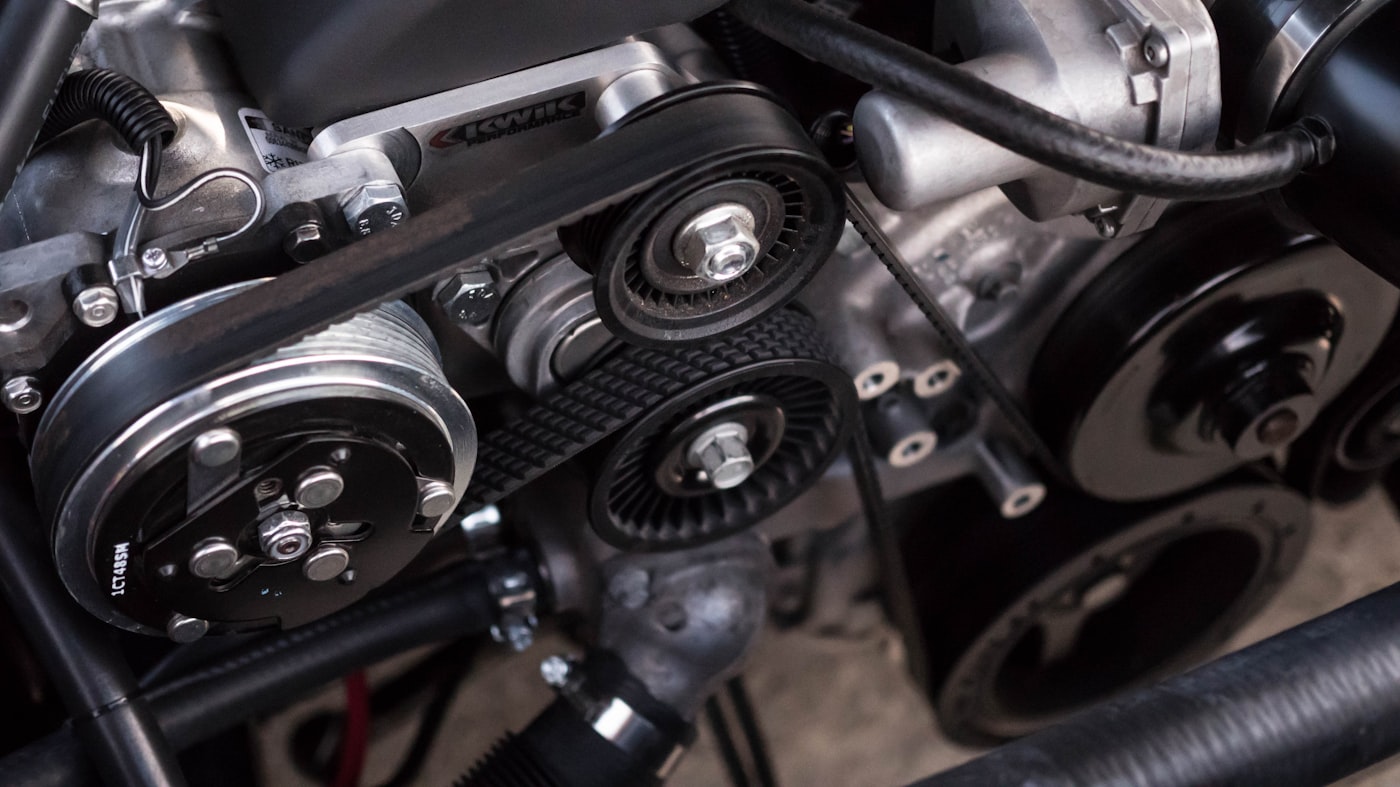
Cars develop new sounds. It is the most reliable thing about them. A car that runs silently for a year will, one Tuesday morning, suddenly have a tick that was not there yesterday, or a soft whirring noise at idle that you have never heard before, or a faint rattling when you go over a particular bump. The instinctive response is either to ignore it (because it might go away) or panic (because it might be expensive). Both are wrong. The right response is to listen carefully for a few minutes and try to characterise it.
I have an old friend who worked as a senior diagnostic technician for two decades, and he taught me that a strange noise is essentially data. The car is telling you something specific. Your job is to capture enough of the message that a mechanic can interpret it quickly. Most strange sounds can be narrowed down to one of perhaps fifteen possibilities with a fifteen-minute investigation in the driveway, and that single piece of information saves significant time and money at the garage.
Step one: characterise the sound
Before you can diagnose anything, you need to describe what you are actually hearing. Sit in the car with the radio off and listen properly. Then write down (or note on your phone) the answers to seven questions:
- What does it sound like? Tick, knock, whirr, whine, squeal, rumble, scrape, hiss, clunk, thump. Each of these means something different. A tick is usually rhythmic and mechanical. A whirr is steady and rotational. A clunk is a single event.
- When does it happen? At idle, when accelerating, when braking, when turning, when going over bumps, only when cold, only when warm, only at a specific speed.
- Where is it coming from? Front, rear, left, right, under the bonnet, under the car, near a wheel.
- How frequent is it? Once per engine revolution, twice per engine revolution, once per wheel revolution, continuous, intermittent.
- Does it change with engine speed? Does it get faster as the revs rise? Does it disappear above a certain speed?
- Does it change with road speed? Some noises change with engine RPM (engine-related), others with road speed (wheel-, brake-, or transmission-related).
- Is the car driving differently? Less power, more vibration, pulling, smelling, smoking.
These seven answers will get a competent mechanic 80 percent of the way to a diagnosis before they even open the bonnet. Record an audio clip on your phone with the windows down, ideally at the speed where the noise is loudest. A short video of the road and your dashboard at that moment is even better.
The common diagnoses, mapped to symptoms
The list below is not exhaustive, but it covers the noises that account for the vast majority of unfamiliar sounds. Match what you are hearing to the description that fits most closely.
- Rhythmic tick at idle, gets faster with revs, fades when warm: often a slightly loose tappet or hydraulic lifter. Not usually urgent on a warm engine. If it persists hot, may need attention.
- Loud knock at idle, deep and metallic: potentially serious. Could be worn bearings, low oil, or wrong fuel grade. Check oil level immediately; if low, top up. Do not drive at speed until investigated.
- Squeal on cold start, fades after a minute: usually a slipping auxiliary belt. Common in damp weather. Replace the belt if it persists.
- Whine that rises with engine speed: often the power steering pump (especially if it gets louder when turning) or the alternator (if accompanied by dim lights).
- Roaring noise that gets louder with speed: usually a wheel bearing. Often changes pitch when you swerve the car gently from side to side; the side with the bad bearing will get quieter when weight is taken off it.
- Clunk over bumps: usually worn suspension components, often anti-roll bar links or drop links. Inexpensive parts, important to replace for handling.
- Grinding when braking: brake pads have worn through. Replace pads and probably discs urgently. See our piece on recognising early brake trouble for more on this.
- Rattle at idle that disappears off-idle: often a heat shield on the exhaust that has rusted loose, or a flexible coupling in the exhaust starting to fail. Usually cheap.
- Whirring or chirping under the bonnet that rises with revs: typically a tensioner pulley or idler pulley on the auxiliary belt. Small and inexpensive parts.
- Hiss after switching off: usually normal. Hot engine components release pressure or evaporate residual fluid. If accompanied by a smell of coolant or fuel, investigate.
- Clicking on full lock when turning: outer constant velocity joint on a driveshaft has worn. Usually only noticeable on tight turns. Should be replaced in coming months, but not urgent.
- Rumble through the floor that changes with road speed: can be a wheel bearing, a worn tyre with cupped wear, or a propshaft (on rear-wheel-drive cars).
Where the noise really lives: a basic localisation test
If you cannot tell where a noise is coming from by ear, two simple techniques help.
First, a long screwdriver makes a passable mechanic’s stethoscope. With the engine running at idle, put the metal tip of the screwdriver against the suspect part and the handle against your ear (or against the bone behind your ear). The sound transmits up the screwdriver and you can compare different parts. Be very careful of moving parts; do not touch any belt, pulley, or fan with the screwdriver while the engine is running.
Second, swap pairs. If you suspect a particular wheel of a noise, jack the car safely and have an assistant rotate the wheel by hand while you listen. Compare to the wheel on the other side. The difference is often immediately obvious.
What to do once you have characterised it
Take the notes, the audio clip, and the description to a garage. Tell them all seven things, play them the clip, and let them work from there. A good mechanic, given clear information, can usually identify the noise within a few minutes of road testing or inspecting. A vague description (“there’s a funny noise sometimes”) wastes hours and leads to higher labour costs, because they have to drive the car repeatedly to find it.
If the noise is mild and the car is driving normally, you can usually drive sensibly to the garage for a booked appointment. If the noise is loud, accompanied by a warning light, or accompanied by a change in how the car drives, do not drive it; arrange recovery instead. The cost of being wrong about driving on with a serious noise is much higher than the cost of a recovery truck.
The noises that mean stop right now
A short list of sounds that should make you pull over and not drive any further:
- A loud knocking or hammering from the engine, especially if accompanied by the oil warning light.
- A continuous hiss or whistle that gets louder, especially with steam from under the bonnet (coolant loss, overheating imminent).
- A loud grinding from a wheel area, especially combined with vibration through the steering or the brake pedal.
- A sudden bang followed by a loss of power or unusual smell.
- Any noise accompanied by a red warning light on the dashboard.
None of these are common, but if you hear one, treat it as the car asking you, quite politely, to stop before further damage occurs.
The art of listening
Once you have done this process two or three times, you become considerably better at it. You learn what your particular car sounds like at different temperatures and speeds, and you start to notice changes earlier. The same instinct that the Sunday morning routine tries to cultivate (an awareness of baseline normal) is what makes noise diagnosis fast.
The single biggest difference between owners who have expensive surprises and owners who do not is the ability to notice a sound has changed and to investigate before it ripens. Almost every dramatic engine failure I know of had a quiet early version that the owner ignored for weeks. Almost every cheap repair I know of was caught because the owner heard something new and acted within days.
Cars genuinely do speak. They are honest, repetitive, and surprisingly precise. The only thing they ask is that someone listen.
Frequently Asked Questions
Yes, almost certainly. The driver hears the car through their hands on the wheel, their feet on the pedals, and the sound bouncing off the windscreen. A passenger has none of those distractions and hears the car more clearly. If your passenger consistently mentions a noise you cannot hear, trust them. Try driving the car as a passenger yourself by having someone else drive; you will almost always hear what they have been describing. New noises that only passengers notice are real and worth investigating.
It can be. A common cause is a slightly worn hydraulic tappet that does not get enough oil pressure at idle. Raising the revs increases oil pressure and the noise quietens. If the noise appears only on cold starts and fades after a minute, it is usually nothing to worry about. If it persists at idle on a hot engine, an oil change with the correct grade often improves it. If a thicker than recommended oil is being used, it can also cause this. Get it checked at the next service if it persists.
A simple test: at a safe speed, push the clutch in (or shift into neutral if automatic) and let the car coast. If the noise disappears or changes pitch with engine RPM, it is engine-related. If it stays the same and changes with road speed, it is wheel-, transmission-, or brake-related. Another test: gently swerve the car left and right on a quiet road; noises that change with cornering loads are usually wheel bearings or constant velocity joints. These two tests narrow the problem dramatically before any tools come out.
Yes, always. Audio recordings are extremely useful for a mechanic, particularly for intermittent noises that may not appear during a road test. Use the voice memo app, sit in the car with the windows down (or close to where you think the noise is coming from), and record at least thirty seconds at the speed or condition where the noise is loudest. Multiple recordings at different speeds are better than one long one. A short video showing the dashboard at the moment is also useful because it confirms speed and engine RPM.
A noise that has been steady for months without getting worse is usually less urgent than one that appeared in the last fortnight. Still, get it diagnosed. Some noises (a worn wheel bearing, a leaking exhaust gasket) can run for surprisingly long periods without serious failure but will eventually need attention. Others (a developing engine knock, a failing turbo bearing) can be steady-state for a while and then deteriorate quickly. A diagnosis costs little and tells you whether you have weeks, months, or years before action is required. Knowing the timeline is what makes the difference.

Smit Sharma
Smit Sharma writes and edits Repair Habit. He is not a licensed technician of anything. What he knows about repair he picked up the ordinary way: watching his father fix things around the flat rather than throw them away, spending two summers as an apprentice in a small electronics shop, and, once he had his own place, running through the mistakes himself on his own washing machine, kettle, chairs, and car. He is a working parent, a slow buyer of new things, and a slightly obsessive maintainer of the ones he already owns. He does not believe repairing your dishwasher makes you a better person. He believes it is often the cheapest and quietest response to a small problem, which is roughly all the philosophy this site carries.
You may also like

Common Car Care Mistakes That Cost You Money
Most expensive car bills are caused by small, well-intentioned mistakes repeated over years. These ten are the ones…

How to Check Your Tire Pressure Properly (and Why It Matters)
Half the cars on British roads are running on under-inflated tyres. The fix takes four minutes and costs…
How to Check and Top Up Coolant Without Guessing the Colour
Coolant colour is dye, not chemistry. Match the additive family (OAT, IAT or HOAT) before you top up,…